
The Early Beginnings: The Abacus
The Abacus is considered the world's first calculation tool. Originally used by Babylonians for basic counting, it evolved over centuries into a board with lines and counters representing units, tens, and hundreds. While technically not a "computer," it laid the foundation for modern mathematics.


The First Mechanical Calculators
In 1642, French mathematician Blaise Pascal invented the first mechanical adding machine, known as the Pascaline. It could perform addition and subtraction to help his father, a tax collector, with tedious calculations.

Later, in 1674, Gottfried Wilhelm von Leibniz improved this design by adding multiplication and division capabilities, creating the Step Reckoner.
The Father of the Computer: Charles Babbage
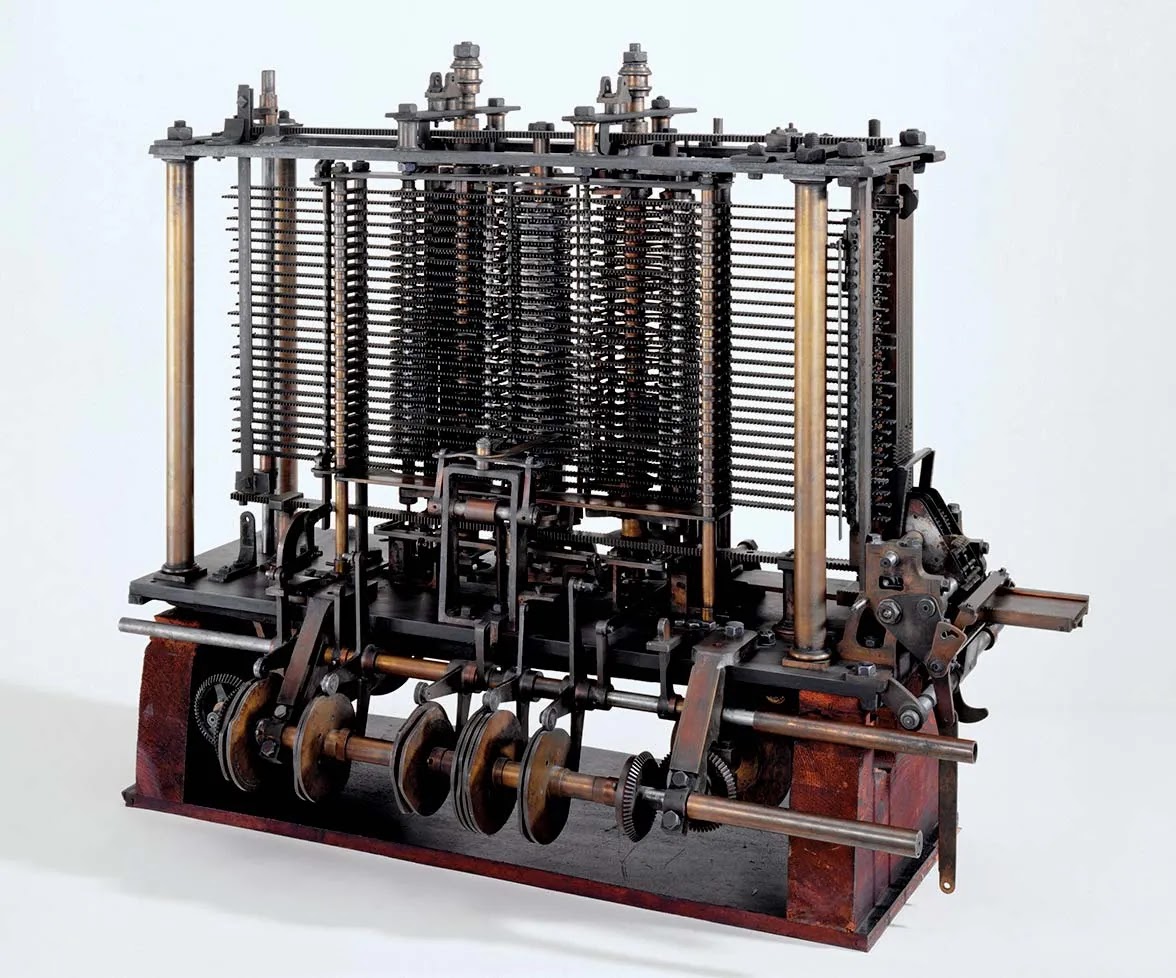
In the 19th century, Joseph Jacquard invented a loom that used Punch Cards to weave patterns. Using this concept, English mathematician Charles Babbage designed the Analytical Engine. Although he couldn't finish it due to limited technology at the time, his design included memory and logic—the core components of modern computers. This is why Babbage is known as the "Father of the Computer."
The Era of Giants: MARK I and ENIAC
In 1944, Howard Aiken, with help from IBM, built the MARK I (Automatic Sequence Control Calculator). This 50-ton beast used 3,000 electro-mechanical relays and operated via punch cards.

By 1946, the world saw its first true digital computer: the ENIAC (Electronic Numerical Integrator Analyzer and Computer). It used 18,000 vacuum tubes and could perform 5,000 calculations per second, though it occupied 1,500 square feet of space!


The Transition: Transistors and ICs
The invention of the Transistor in 1948 by John Bardeen, William Shockley, and Walter Brattain changed everything. Transistors replaced bulky vacuum tubes, making computers faster, smaller, and more reliable.


In the 1960s, Integrated Circuits (IC) were born, allowing thousands of transistors to fit on a single chip. This era also introduced the Keyboard, Mouse, and Monitors as we know them today.
 |
| Punch Card |

The Personal Computer Revolution
From 1971 onwards, the Microprocessor was introduced. This allowed computers to handle multiple tasks at once and gave birth to the Graphical User Interface (GUI)—meaning users could click icons instead of typing complex commands.


In the 1980s, IBM and Apple released the first home computers, making technology accessible to everyone. This era saw the introduction of Hard Disks, Floppy Disks, and the birth of Computer Networking.

The Future: AI and Beyond
Today, we live in the age of Ultra Large Scale Integration (ULSI), where millions of circuits fit on a tiny silicon chip. With the power of the Internet and Artificial Intelligence (AI), computers can now perform tasks in seconds that once took years.
From a wooden abacus to the palm of your hand, the evolution of the computer is a testament to human innovation.

Post a Comment